
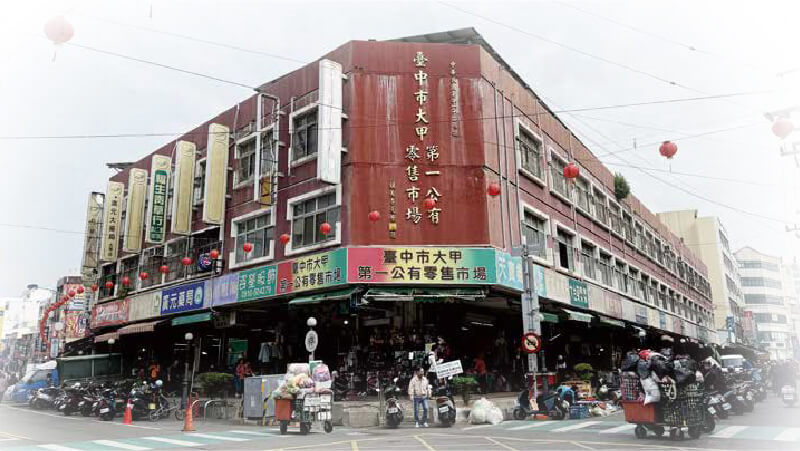
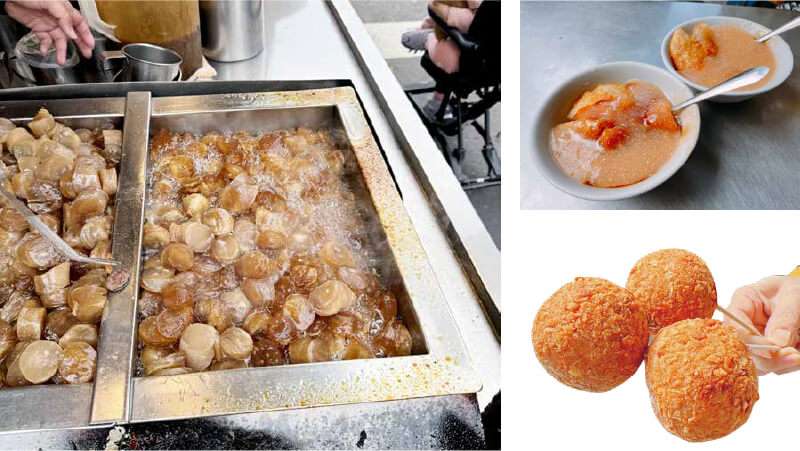
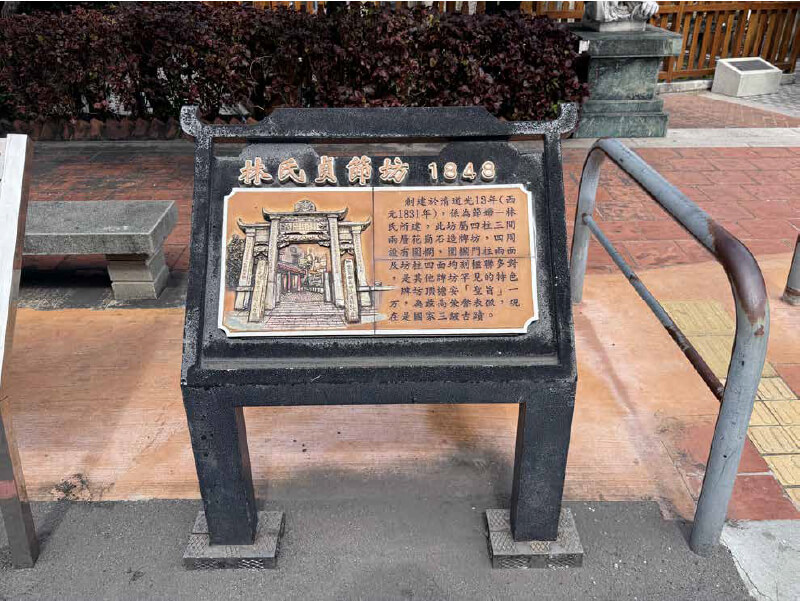
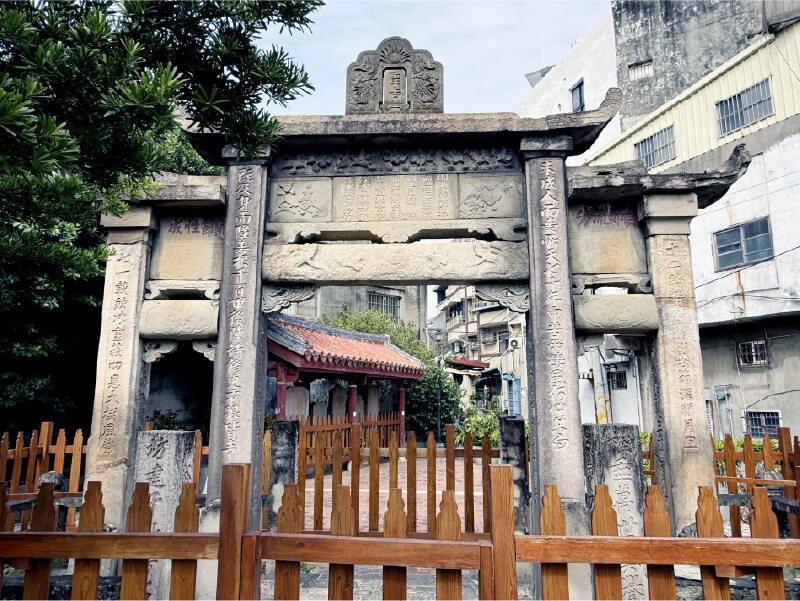
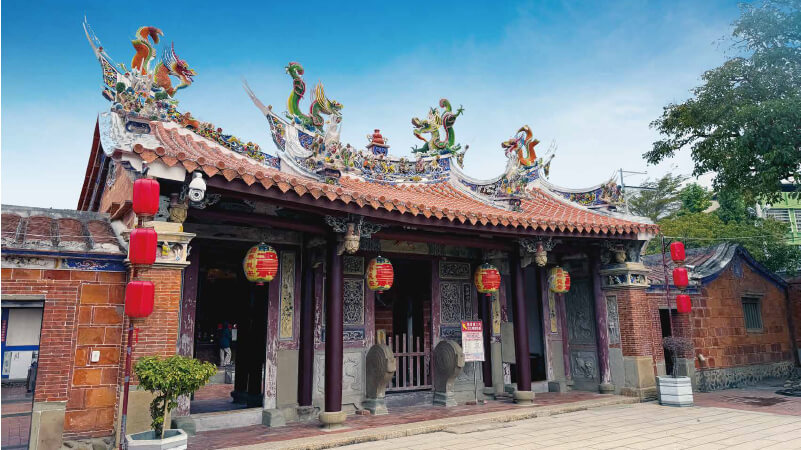
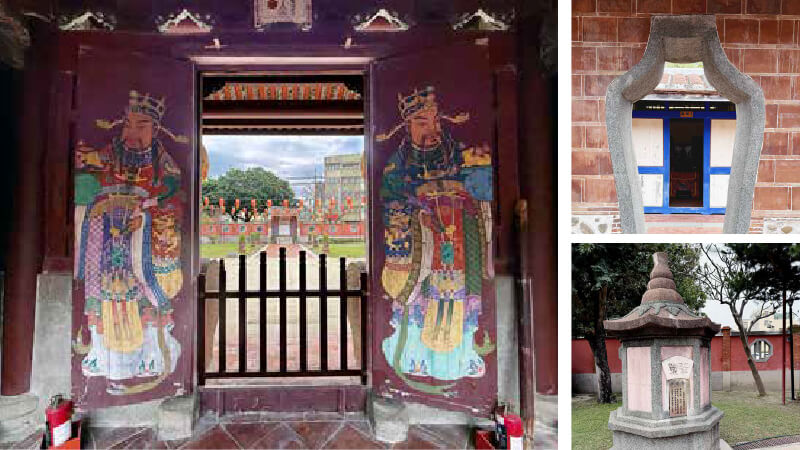
傳統市場為庶民生活窗口,許多在地美食隱身其中:由潔淨大安溪水孕育綿密鬆軟的「大甲芋仔」,百百款的芋頭料理,不管甜鹹都對味;北中南粉腸各不同,中部尤以大甲最出名,口感Q彈像肉圓,更是不可錯過的人氣小吃。沿途探訪兩處三級古蹟,一為位在舊南門旁的林氏貞孝坊,紀念林春娘其貞節、孝順與三次祈雨皆靈為大甲解危,成為大甲三神之一;二為考生必訪的文昌祠,欣賞清帝國時期與日治時期獨有的建築元素。跟著懷舊路線輕踩步伐,絕對收穫滿滿。

說出實地踏查後發現的美食和故事,再購買最想吃的一道餐點,好好享受!
Where are we now?
這裡是哪裡呀?
We are at Dajia First Market. There are many special and traditional foods here!
這裡是大甲第一市場,沿途還有林氏貞孝坊、文昌祠,大甲在地懷舊美食與古蹟都在其中喔!
What is the most famous food in Dajia?
那大甲最有名的美食是什麼?
There is taro, rice sausage, and butter pastry ! Do you want to try some taro?
有芋頭、粉腸、奶油酥餅!
你想試試看芋頭嗎?
Yes! I'm so hungry.
好啊!我好餓。
Taro can be sweet, savory, eaten, drunk, cold, or hot. What would you like to eat?
芋頭有甜的、鹹的、吃的、喝的、冰的、熱的通通都有,你想要吃什麼?
I'd like a taro ball and a cup of taro milk.
我想要來一顆芋頭丸搭配一杯芋頭牛奶。
How does it taste?
這嚐起來如何?
It tastes delicious!
綿綿甜甜,太美味了!
- traditional 傳統的
- pastry 油酥點心
- savory 鹹的;辛辣的

用演戲、唱歌或肢體表達的方式將聽到的傳說故事表演出來。
Is there a special reason why the food in Dajia is so different from others?
大甲的美食與眾不同,難道有特別的由來嗎?
Exactly! I'll take you to try traditional foods and tell you stories when we eat.
沒錯!就是要帶你吃懷舊美食,邊吃邊聽我說故事。
Where are we now?
咦?這裡是哪裡呀?怎麼帶我來這裡野餐?
Dajia has many special stories about food and landmarks. Look! This is Lin-shi Chastity Memorial Arch. Thousands of tourists come here to visit the historic sites.
大甲除了美食有特殊由來外,還有許多傳說故事可以聽。你看這裡是林氏貞孝坊,每年都會有許多遊客來這裡拜訪。
What's the story here?
這裡有什麼故事呢?
Let me tell you all about it.
讓我跟你娓娓道來。
- different from 有別於
- landmark 地標
- memorial 紀念物;紀念碑
- tourist 遊客
- historic 有歷史意義的